Understanding Rendezvous and Proximity Operations in Orbit
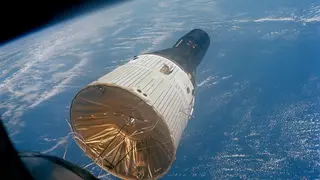
Rendezvous and proximity operations describe a spacecraft's deliberate approach to another object, ranging from hundreds of kilometers away to docking or physical capture. Cooperative targets assist with docking ports, sensors, or stable attitude, whereas non-cooperative targets offer no help and may require inspection or capture. The first crewed rendezvous involved Gemini 6A and Gemini 7 in December 1965, and modern examples include ISS docking, satellite servicing, and non-cooperative tracking.
RPO spans the whole approach, from hundreds of kilometers out to contact. Around the ISS, a visiting vehicle must be cleared before entering a 200 m keep-out sphere inside a 4 by 2 by 2 km approach ellipsoid. Gemini 6A's catch-up of Gemini 7 on December 15, 1965, put two crews in formation for over five hours, closing to roughly 30 cm.
Relative motion is counterintuitive: thrusting toward a target in the same orbit raises your orbit, and higher orbits are slower, so the gap widens. Dropping lower speeds you up, letting the target drift toward you.
RPO capabilities could shape how satellites are maintained, inspected, and retired, affecting operators, insurers, and militaries alike. Servicing unprepared clients may extend the working lives of expensive assets, while non-cooperative tracking and capture raise questions about who may approach whom in orbit. As more actors fly RPO, norms for transparency and consent may matter as much as the hardware.