Why Dignity Could Strengthen Peace and Security Policy
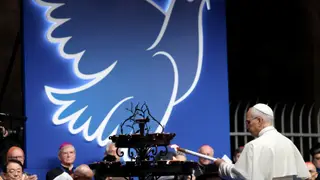
The article argues that dignity, despite being dismissed in foreign policy circles, remains a widely shared value that could strengthen peace and security efforts. It cites polling showing near-universal American support for treating all people with dignity and notes growing attention to the concept from figures like the Pope and economists. The authors contend that focusing on dignity can help build consensus for international commitments and more durable peace agreements.
Recent national polling found 94% of Americans agree that every person merits dignified treatment, an unusually broad consensus. The authors contrast this with elite foreign-policy thinking, such as CFR's "Future of American Strategy" initiative, which tends to justify international law, collective security, and humanitarianism through narrower economic or security interests.
Dignity also appears in postwar foundations: the UN Charter affirms the worth and dignity of the human person, and the 1948 Universal Declaration of Human Rights calls inherent dignity the basis of freedom, justice, and peace. Pope Leo's encyclical mentions dignity 105 times; economist Gene Sperling's essay mentions it 125 times. Tunisia's Mohamed Bouazizi illustrates how humiliation can generate powerful emotional reactions, including vengeful impulses.
A renewed emphasis on dignity in peace and security policy could affect diplomats, military planners, civilians in conflict zones, and publics. Because dignity appears widely shared, it may help policymakers build broader support for international commitments and make peace agreements more durable. However, its practical influence may depend on whether leaders treat it as a guiding principle rather than rhetoric.