Gene-Based Vision Approach Shows Signal in Advanced Retinitis Pigmentosa
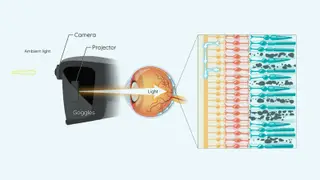
A small trial tested an optogenetic treatment that introduces light-sensing genes into the eye, paired with light-stimulating goggles, in patients with advanced retinitis pigmentosa. Seven of 10 participants had better light sensitivity, with six showing clinically meaningful improvement, while eye-related side effects were common but mostly mild or moderate. Researchers said the early results support further study and may also have potential for other blinding conditions where retinal ganglion cells remain viable.
Retinitis pigmentosa damages the retina's rods and cones, the cells that normally detect light. The experimental strategy instead inserts a gene for ChrimsonR, a light-responsive protein, into retinal ganglion cells using an adeno-associated virus. Because these ganglion cells do not ordinarily sense light, patients wear goggles that capture images, process them, and project patterned light of a wavelength that activates the protein.
In the 10-person advanced-RP trial, seven participants gained light sensitivity and six reached a clinically meaningful threshold. Ocular side effects were frequent: 34 events across nine patients, including one severe event. RP includes more than 100 genetic defects, so an approach not tied to one mutation could potentially apply broadly, including to other blinding conditions where retinal ganglion cells survive.
People with advanced retinitis pigmentosa, and possibly those with other blinding conditions that spare retinal ganglion cells, could gain a new option if larger trials confirm benefit. Improved light sensitivity may help orientation, mobility, and daily independence, though gains would likely depend on training and device use. Clinicians and caregivers may see changed expectations, while health systems could face questions about cost, access, and long-term safety. These remain early possibilities, not established outcomes.