Restoring Lost Oyster Reefs Could Deliver Trillions in Ecological Value
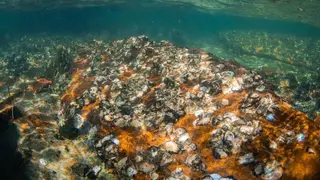
Researchers mapped coastal regions where oyster reefs could grow but are now mostly absent. They estimated that rebuilding reefs in ten leading countries could generate about $12 trillion in gross ecosystem product. The benefits include cleaner water, carbon storage, shoreline protection, and habitat for marine species.
Oyster reefs are built by dense clusters of oysters that cement to one another, forming complex underwater structures. They support biodiversity, filter suspended particles, regulate nutrients, dampen wave energy, and offer food, shelter, and nursery areas for fish and invertebrates. Roughly 85% of global oyster reefs have vanished in the last century, according to the study.
Researchers used machine learning and thousands of georeferenced records to predict suitable habitat from temperature, salinity, light, nutrients, and oxygen. Ten nations—including the U.S., China, Japan, Australia, and several others—hold about 295,000 square kilometers of suitable reef area, yet known reefs cover only about 10% of it. Only 23% lies within marine protected areas.
Coastal communities, fishers, tourism operators, and residents in the ten countries may benefit if restored reefs improve water quality, fish habitat, and shoreline protection. Carbon storage and nutrient removal could yield broader environmental gains, though the $12 trillion estimate is uncertain and depends on large-scale restoration and conservation. Governments, conservation groups, and local stakeholders might face trade-offs over funding, marine protection, and access.