Wyoming Fossils Reveal Exceptionally Bulky Jurassic Belemnite
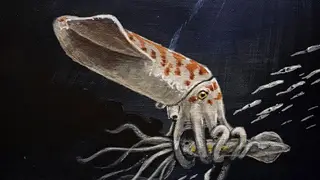
A new belemnite species, Wyoteuthis linsterorum, was identified from two Wyoming fossils dating to about 160 million years ago. It had the widest internal guard ever recorded for the group, giving it a barrel-shaped body unlike typical slender belemnites. CT scans linked the animal to a family previously thought to have gone extinct millions of years earlier.
Wyoteuthis linsterorum is known from two Wyoming specimens in the Sundance Formation, rocks recording an ancient inland sea. It lived about 160 million years ago and was a belemnite, an extinct cephalopod relative of squid and octopuses. Its fossilized guard measured roughly 10 cm long and 6 cm wide, much broader than typical Wyoming belemnite guards.
CT scans examined the fossils without cutting them and linked the species to a belemnite family thought to have vanished millions of years earlier. Including arms, the living animal may have been about 60 cm long. Despite millions of belemnite fossils found in Wyoming, only two examples of this species are known.
This find could draw more public attention to Wyoming's fossil heritage and to the role of museum collections, where overlooked specimens may still yield discoveries. Local collectors and rockhounds may feel encouraged that their observations can contribute to paleontology. Museum visitors and students might gain a vivid example of how CT scanning and international collaboration can revise ideas about extinct animals. It may also prompt researchers to reexamine similar belemnite fossils for hidden diversity.