Biologists Reinterpret Honeybee Swarming and Colony Lifespan
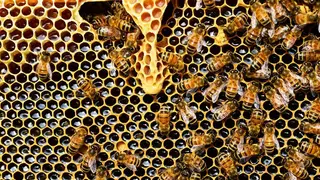
A review by researchers at Lund University and the University of Oulu proposes that a honeybee swarm is the original colony departing with its queen, not a reproductive event. The authors argue that when a new queen takes over, the colony becomes a new superorganism with a different genetic identity, so colonies are mortal members of a lineage. They also suggest that afterswarms may let the parent colony produce additional offspring.
Since the early 1900s, biologists have described a honeybee nest as a superorganism, with workers resembling body cells and the queen resembling reproductive tissue. Edward Wilson’s 1971 book placed a replacement queen within the same colony, implying possible immortality. A competing view holds that the queen and her mates define the colony’s genotype, so a new queen means a new colony.
Bonhoff and Helanterä adopt that second view. They see repeated nests as a chain of related, mortal superorganisms. Because swarming precedes fertilization, they argue the prime swarm is the parent colony relocating, while afterswarms let it yield further offspring. They compare this to marine worms whose reproductive segments detach before mating.
This reframing could influence how beekeepers, conservationists, and biology educators discuss colony identity, aging, and reproduction. If colonies are seen as mortal lineages rather than immortal units, public understanding of hive loss and replacement may shift. It may also affect how research on honeybee health is framed, though practical management likely remains guided by ecological and agricultural evidence.