Ancient Egyptian Scribes Used Drawings as Tools for Solving and Verifying Math
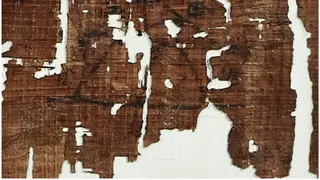
A new study examines how scribes in Roman Egypt combined diagrams with numerical calculations. Thomas Kelly of the University of Cambridge found that these sketches were a common practice and played an active role in solving and checking math problems. The research considers examples such as calculating a field's area by drawing a triangle on papyrus.
A recent study by Thomas Kelly at the University of Cambridge looks at scribes in Roman Egypt. It finds that their sketches were not merely illustrations. Instead, diagrams regularly accompanied number-based work and helped with working out and confirming mathematical problems.
The research treats such drawings as active parts of calculation. One example involves finding the area of a field by sketching a triangle on papyrus. This suggests that visual reasoning was a normal part of scribal mathematical practice in that setting.
This research could affect how educators and historians present ancient mathematics, encouraging attention to diagrams alongside numbers. Students and teachers may gain a broader view of problem-solving as visual and written. Museums and textbook authors could use such findings to frame scribal work as practical and intellectual. Because evidence is limited to the study’s examples, broader claims about ancient education or modern teaching should remain cautious.