Palladyne AI outlines path to true autonomy for battlefield drones
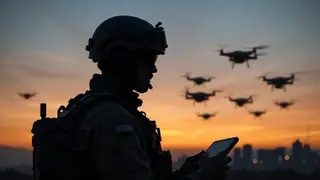
A sponsored article from Palladyne AI examines how decentralized embodied collaborative AI could let drones sense, reason, and act without constant operator control. The company’s CEO distinguishes genuine autonomy from waypoint following or preprogrammed flight, saying real autonomy requires real-time machine decisions. It also compares five levels of UAV autonomy to the levels used for self-driving cars.
Palladyne AI’s CEO, Ben Wolff, argues that “unmanned” does not equal “autonomous.” He rejects labeling waypoint navigation or coordinated preplanned flight as autonomy, because genuine autonomy requires the aircraft itself to make decisions in real time rather than execute choices made earlier by people.
The company’s DECA concept places intelligence aboard each drone, allowing independent, immediate responses to changing conditions. Wolff maps UAV autonomy to five tiers similar to self-driving cars: Level 0 involves direct remote control, while Level 5 involves a high-level mission—such as searching a 20-square-mile area for a specific emissions signature—executed without further input. Intermediate levels need progressively less human involvement.
If battlefield drones gain greater real-time decision-making, military operators could manage more tasks with less direct control, potentially changing how small units use aerial support. This may reduce some workload but also raise questions about oversight, accountability, and the reliability of machine choices in unpredictable environments. Defense planners, drone developers, and warfighters would be most directly affected; broader society may feel indirect effects through how conflicts are conducted and how autonomous systems are governed.