Korean Orthopedics Congress Highlights Hangung for Musculoskeletal Care
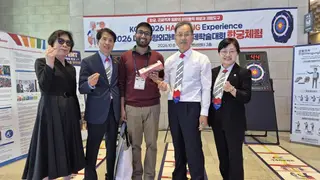
The 70th Anniversary Congress of the Korean Orthopaedic Association opened on October 8 in Suwon, with about 2,800 orthopedic surgeons from 28 countries attending. A special booth let participants try Hangung, a Korean pin-throwing sport, to demonstrate its biomechanical principles and possible rehabilitation uses. Organizers and international doctors discussed its potential for preventing and treating musculoskeletal disorders.
The congress, marking the Korean Orthopaedic Association’s 70th year, runs Oct. 8–10 in Suwon and draws roughly 2,800 specialists from 28 nations. Its third-floor Hangung booth invites surgeons to toss pins at electronic targets, illustrating the sport’s biomechanics and rehabilitation possibilities.
Hangung is a Korean all-ages sport blending Tuho, Gukgung and Western archery. Players use 4-gram magnetic pins, five throws per hand. Rules discourage flared shoulders and lifted heels, promoting balanced posture. A 2016 study of older women with shoulder pain found added range of motion and muscle activity when Hangung accompanied rehabilitation.
The congress could raise international awareness of Hangung as a low-cost, non-pharmacological activity for musculoskeletal prevention and rehabilitation. Orthopedic specialists, rehabilitation patients, older adults, and sports organizations may take greater interest in its balance, posture, and cognitive demands. If followed by research and clinical trials, it may influence exercise recommendations and cross-border collaborations, though its actual impact will depend on evidence, accessibility, and adoption by health professionals.