Crimes Against Humanity Treaty Talks Advance Amid Growing Opposition
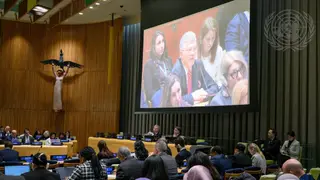
Negotiations on a proposed Convention on the Prevention and Punishment of Crimes against Humanity are continuing despite a difficult multilateral climate. States have submitted initial amendments to the International Law Commission's draft articles, a civil society coalition has formed, and the U.N. General Assembly's Sixth Committee is considering dates for negotiations in 2028. Supporters say they must work harder to preserve momentum and prevent weakening of the treaty.
The treaty process has advanced through a first Preparatory Committee, which chose leaders for that session and the next one scheduled for April 2027. It also opened participation to broader civil society. States then filed initial amendments to the International Law Commission’s draft articles, and a civil society coalition formed.
Sixty-six amendment submissions came from 71 states, the European Union, and the Holy See, spanning all U.N. regional groups but unevenly. China, Egypt, Russia, and Turkey rejected core elements; Japan was the only new state to join that opposing group. The Sixth Committee is weighing 2028 negotiation dates.
If negotiations advance, a future treaty could shape how states investigate and prosecute crimes against humanity, potentially affecting victims, witnesses, and communities seeking accountability. Governments may face new cooperation and prevention duties, while civil society groups could gain clearer avenues to press for justice. Opposition and delays may weaken protections or slow progress, leaving affected populations waiting longer. The outcome may influence how international law responds to mass atrocities.