Study Explains How Robot Dog Finished a Marathon on One Charge
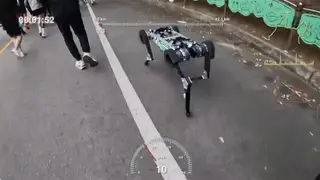
A South Korean quadruped robot named RAIBO2 completed a full marathon on a single battery charge in 2024, finishing in just over 4 hours and 19 minutes. A new study in Nature explains how it managed the 26.2-mile hilly course without recharging. The achievement addresses endurance limits for legged robots, which use more energy than wheeled machines on rough terrain.
RAIBO2, a South Korean four-legged machine, ran the 22nd Sangju Dried-Persimmon Marathon on Nov. 17, 2024. It covered 42.2 kilometers in 4 hours 19 minutes on one charge, over public roads with two roughly 50-meter climbs and gradients up to 10 degrees. A Nature study published Sept. 23 detailed the run.
Earlier, RAIBO2 completed a 43-kilometer GPS-guided route on flat ground in 4 hours 40 minutes. A previous marathon attempt on uneven terrain ended near 37 kilometers when its battery depleted, partly due to frequent speed adjustments. The team then raised battery capacity by 33% and modified its control system, including actuator-level stiffness regulation.
This feat may shape how legged robots are designed for long missions in uneven settings, from inspection and delivery to disaster response. Researchers and robotics firms could use the energy-management and control insights to extend operating time. Emergency crews, field workers, and remote communities might eventually benefit from machines that can cover more ground without recharging, though cost, safety, and reliability may slow adoption. The public may also encounter such robots in service roles.