Moscow's Pressure Campaign Extends to Detentions and Satellite Threats
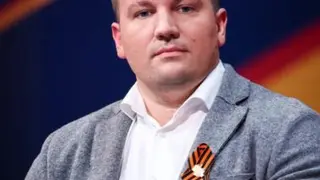
Russian military blogger Mikhail Zvinchuk, founder of the Rybar channel, was detained in Montenegro on October 9, prompting Dmitry Medvedev to suggest using detained Westerners as bargaining chips. Medvedev also warned that U.S. Starlink satellites could be targeted if Russia's Rassvet network were destroyed. The article cites leaked documents describing Chinese proposals to counter Starlink and discusses Moscow's efforts to sustain its war effort through foreign support.
Mikhail Zvinchuk, who founded the Rybar Telegram channel, was held in Montenegro on October 9. Authorities there said his team used media activity to meddle in domestic politics; Rybar said the visit was lawful and a filming request had been filed for Cetinje Monastery. Dmitry Medvedev responded by proposing an “exchange fund” of Europeans and Americans to secure detained Russians.
Leaked July documents described a closed Russian-Chinese military forum in Guangzhou in November 2023. Chinese researchers floated legal pressure, jamming, cyberattacks, and destruction against Starlink, while noting the difficulty of disabling satellites faster and cheaper than SpaceX can replace them. The documents did not show deployment. A sixth forum was reportedly planned for St. Petersburg in autumn.
Count: First para: Mikhail(1) Zvinchuk(2), who(3) founded(4) the(5) Rybar(6) Telegram(7) channel(8), was(9) held(10) in(11) Montenegro(12) on(13) October(14) 9(15). Authorities(16) there(17) said(18) his(19) team(20) used(21) media(22) activity(23) to(24) meddle(25) in(26) domestic(27) politics(28); Rybar(29) said(30) the(31) visit(32) was(33) lawful(34) and(35) a(36) filming(37) request(38) had(39) been(40) filed(41) for(42) Cetinje(43) Monastery(44). Dmitry(45) Medvedev(46) responded(47) by(48) proposing(49) an(50) “exchange(51) fund”(52) of(53) Europeans(54) and(55) Americans(56) to(57) secure(58) detained(59) Russians(60). Second: Leaked(61) July(62) documents(63) described(64) a(65) close
The detention and retaliatory rhetoric could make travel and media work riskier for Russians, Europeans, and Americans perceived as connected to the conflict. Threats involving satellite networks may heighten anxiety among people and institutions dependent on communications, while orbital debris could affect broader space users. Reports of Russian-Chinese technical talks may also shape public debate about how outside support and technological rivalry prolong or constrain the war. Count: The1 detention2 and3 retaliatory4 rhetoric5 could6 make7 travel8 and9 media10 work11 riskier12 for13 Russians14 Europeans15 and16 Americans17 perceived18 as19 connected20 to21 the22 conflict23. Threats24 involving25 satellite26 networks27 may28 heighten29 anxiety30 among31 people32 and33 institutions34 dependent35 on36 communications37 while38 orbital39 debris40 could41 affect42 broader43 space44 users45. Reports46 of47 Russian-Chinese48 technical49 talks50 may51 also52 shape53 public54 debate55 about5