NASA Reconsiders Hubble Reboost as Orbit Decays
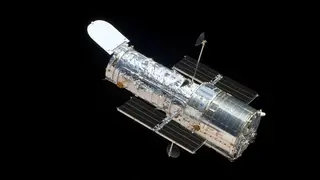
Hubble's orbit has decayed from roughly 612 km at deployment to below 500 km, and without a reboost the Space Telescope Science Institute projects a median reentry around mid-2033. The observatory lacks its own engine and is operating with limited gyroscopes, though its scientific work continues. NASA previously declined a privately funded Dragon reboost, but in mid-2026 it signaled renewed interest if costs can be reduced.
Hubble was built for shuttle servicing, not self-propulsion. Five repair missions between 1993 and 2009 replaced parts and raised its path; after Atlantis departed in 2009, no further visits occurred, and the shuttle fleet retired in 2011. Without thrust, atmospheric drag alone now governs its altitude.
Solar Cycle 25 exceeded predictions, heating the upper atmosphere and increasing drag. That helped bring down 38 Starlink craft in 2022 and has accelerated Hubble's descent. STScI's median reentry estimate is mid-2033 absent intervention, though earlier dates have been discussed.
Hubble's eventual loss could affect astronomers, educators, and the public who rely on its images and data. A successful reboost may extend cosmology observations and test whether private craft can service aging satellites. If it reenters, the gap may be felt in public engagement and in planning for future space telescopes, though other observatories may continue some of its science.