Microsoft Releases MXC to Constrain AI Agent Permissions
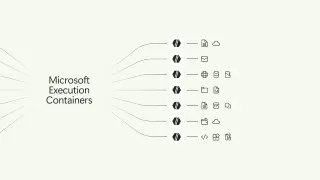
Microsoft Execution Containers are now generally available, providing policy-driven runtime boundaries for AI agent workloads. MXC can restrict file, network, process, and UI access outside the agent's control, with support from Codex, GitHub Copilot, OpenClaw, Replit, and others. Learning and Permissive modes let developers observe behavior before enforcing least-privilege policies.
Microsoft Execution Containers are now generally available as a policy-driven runtime boundary for AI agent workloads. Enforcement occurs outside the agent, so generated code, tools, plugins, or the agent harness cannot grant themselves extra permissions. Policies can cover containment environment, processes, filesystem, network connectivity, and user-interface access.
Windows 11 supports MXC, while selected containment backends also work on macOS and Linux. Codex, GitHub Copilot, OpenClaw, and Replit already support it, with Claude Code support planned. Learning and Permissive modes help developers study agent behavior before applying stricter least-privilege rules.
For software teams and IT administrators, MXC may reduce the chance that autonomous coding or desktop agents exceed intended authority, potentially limiting damage from mistakes or compromised tools. Developers could gain safer ways to test agents before broad deployment, while end users might benefit from stronger separation between agent activity and personal desktop resources. However, the practical impact will depend on adoption, policy quality, and whether containment backends provide consistent protection across platforms.