Legal scholar examines Navi Pillay's Nobel Prize and impartiality questions
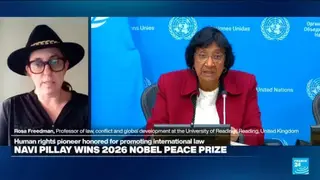
A law professor assessed Navi Pillay's long record in international law and human rights after her Nobel Peace Prize award. The discussion also considered whether the prize was recognizing individual achievement or sending a political message, particularly amid controversy over Israel and Gaza.
Rosa Freedman, a professor of law, conflict and global development at the University of Reading, discussed Navi Pillay’s record with Haxie Meyers-Belkin. Pillay’s career includes work in post-apartheid South Africa and at the United Nations, alongside a long involvement in international law and human rights.
The conversation weighed her achievements against questions about political neutrality, especially concerning Israel and Gaza. It also asked whether the Nobel Peace Prize honors an individual’s merits or conveys a political signal, as international legal and multilateral bodies face pressure.
The award and the debate around it may shape how different publics view international justice and the Nobel Peace Prize itself. Supporters of Pillay could see greater recognition for human rights work, while critics may question whether the honor appears politically timed. This could affect trust in courts, UN bodies, and legal experts, and may influence how future laureates and their records are scrutinized. Communities connected to Israel and Gaza might also follow the discussion closely, though the prize’s practical effects remain uncertain.