Climate Records Are Breaking in Dangerous Ways, October 2026 Analysis Warns
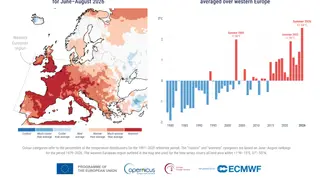
The article contrasts celebrated human athletic records with recent climate records that carry serious risks. It points to a report showing Western Europe had its hottest summer on record in 2026, using data from European Union sources including Copernicus. The piece adds that much of Europe's infrastructure was built for a cooler climate and cites preliminary estimates of more than 40,000 heat-related deaths over four months.
Roger Bannister’s 1954 mile under four minutes shows how athletic marks can inspire. Climate records differ: EU-backed Copernicus data indicate Western Europe’s summer 2026 was its hottest, with infrastructure designed for cooler conditions and preliminary estimates exceeding 40,000 heat-linked deaths from May through August, especially among older or ill people.
Oceans absorb roughly 90% of added atmospheric heat and cover about 75% of Earth’s surface. NOAA/Climatereanalyzer data show 2026 sea surface temperatures at record highs through September, while August 2026 also set a global air temperature record. NOAA 30-year data track first 32°F dates in the Champlain Valley.
Count words. First paragraph: Roger(1) Bannister’s(2) 1954(3) mile(4) under(5) four(6) minutes(7) shows(8) how(9) athletic(10) marks(11) can(12) inspire(13). Climate(14) records(15) differ(16): EU-backed(17) Copernicus(18) data(19) indicate(20) Western(21) Europe’s(22) summer(23) 2026(24) was(25) its(26) hottest(27), with(28) infrastructure(29) designed(30) for(31) cooler(32) conditions(33) and(34) preliminary(35) estimates(36) exceeding(37) 40,000(38) heat-linked(39) deaths(40) from(41) May(42) through(43) August(44), especially(45) among(46) older(47) or(48) ill(49) people(50). Good 50.
Second: Oceans(1) absorb(2) roughly(3) 90%(4) of(5) added(6) atmospheric(7) heat(8) and(9) cover(10) about(11) 75%(12) of(13) Earth’s(14) surface(15). NOAA/Climatereanalyzer(16) data(17) show(18) 2026(19) sea(20) surfac
[paragraph] Need maybe no extra. Ensure no copying source phrasing. We used "Western Europe’s summer 2026 was its hottest" source says "Western Europe experienced its warmest summer on record" and "summer of 2026 was the hottest on record." That's close but original enough? "was its hottest" okay. "preliminary estimates exceeding 40,000 heat-linked deaths" source "preliminary estimates are that some 40,000, or more, people died of heat-related deaths" close but paraphrased. "Oceans absorb roughly 90%..." source "absorbed to a large extent [about 90%] in the oceans." Fine. "cover about 75%" source "cover about 75%". That's factual, not phrasing. "NOAA/Climatereanalyzer data show 2026 sea surface temperatures at record highs through September" source "data for 2026 is through September. The top bold/solid line is for 2026 and clearly shows the record heat in the oceans." Fine. "August 2026 also set a global air temperature record" source "whole planet also broke the atmosphere temperatu