Gene Therapy and Light-Stimulating Goggles Improve Vision in Inherited Blindness
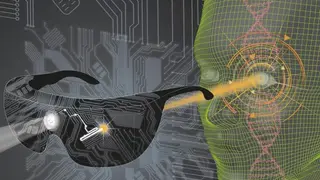
An international trial tested an optogenetic treatment that made surviving retinal ganglion cells light-sensitive in ten people with advanced retinitis pigmentosa. Participants received an injection carrying instructions for the ChrimsonR protein, then wore goggles that converted scenes into amber light pulses to activate the modified cells. Seven patients became more sensitive to light, six showed clinically meaningful gains, and four of eight tested improved at detecting or locating objects, though normal vision was not restored.
Retinitis pigmentosa is inherited and gradually disables photoreceptors. Because over 100 genes can be involved, correcting each mutation separately is impractical. The trial instead targeted retinal ganglion cells, which often remain after photoreceptors fail. Ten people with advanced disease received one injection in their poorer eye carrying ChrimsonR instructions. Camera-equipped goggles translated scene changes into amber flashes, activating those cells.
Seven participants became more light-sensitive, six reached meaningful clinical gains, and four of eight tested improved at finding or detecting objects. Brain recordings showed visual signals reaching vision-related areas. More goggle training correlated with better object detection, while reading and face recognition remained impossible. Safety was primary; most eye side effects were mild or moderate, and one severe post-injection event quickly resolved.
Count first para: Retinitis(1) pigmentosa2 is3 inherited4 and5 gradually6 disables7 photoreceptors8. Because9 over10 100? "over 100" maybe 100 is number. 11 genes? Let's count carefully. Retinitis1 pigmentosa2 is3 inherited4 and5 gradually6 disables7 photoreceptors8. Because9 over10 10011 genes12 can13 be14 involved15, correcting16 each17 mutation18 separately19 is20 impractical21. The22 trial23 instead24 targeted25 retinal26 ganglion27 cells28, which29 often30 remain31 after32 photoreceptors33 fail34. Ten35 people36 with37 advanced38 disease39 received40 one41 injec
1 paragraph under 90 words. Measured analysis possible impact society, who affected and how, framed could/may, never fact, no political advocacy. Need under 90. Draft: For people with advanced inherited blindness, this approach could offer modest functional gains, such as better object detection or navigation, rather than normal sight. Families and caregivers may see changes in daily independence if benefits persist. Health systems and developers may face questions about cost, access, and long-term rehabilitation, since training appears important. Because results are early and limited, any broad social effect would likely depend on larger trials, durability, and whether future versions restore more useful vision. Count: For1 people2 with3 advanced4 inherited5 blindness6, this7 approach8 could9 offer10 modest11 functional12 gains13, such14 as15 better16 object17 detection18 or19