Lunar Reconnaissance Orbiter Mosaic Reveals the Moon's Rugged Farside
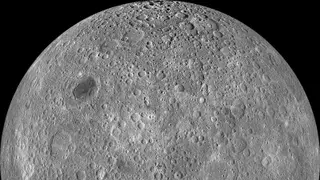
Because the Moon is tidally locked, the same side always faces Earth, but a spacecraft can observe the opposite hemisphere. A mosaic assembled from more than 15,000 Lunar Reconnaissance Orbiter images shows the farside's rough terrain at high resolution. Scientists believe the farside's thicker crust kept molten material from rising to create the smooth dark plains seen on the nearside.
The Moon rotates in sync with its orbit, so Earth observers always see the same hemisphere. A spacecraft in lunar orbit can instead survey the hidden farside. The Lunar Reconnaissance Orbiter's wide-angle camera produced a mosaic centered there, using more than 15,000 images collected from late 2009 through early 2011.
At its sharpest, that global mosaic resolves features at 100 meters per pixel. The farside appears rough and heavily battered, unlike the nearside's smooth dark maria. Scientists suggest the farside's thicker crust blocked interior molten rock from reaching the surface, limiting maria formation.
High-resolution farside maps could help scientists and mission planners better understand lunar geology and assess landing hazards. Space agencies and commercial teams may use such data when considering future robotic or crewed missions. Educators and the public could also gain a clearer view of why the Moon's two hemispheres differ, potentially deepening interest in planetary science and exploration.