Experimental Capsules Test Advanced Heat Shield Materials During Reentry
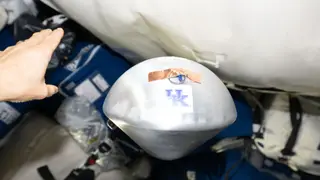
NASA used the departure of a Northrop Grumman Cygnus cargo craft from the International Space Station to test 12 small experimental capsules. The KREPE-3 mission, involving University of Kentucky students and NASA partners, collected data on new thermal protection materials as the capsules reentered Earth's atmosphere. Researchers say the low-cost approach could inform heat shields for future crew and cargo missions returning from the Moon or Mars.
KREPE-3 is the third flight in a low-cost series that gathers reentry data by riding a departing Cygnus XL cargo vehicle. Students at the University of Kentucky built the 12 capsules, which carry instruments for temperature, pressure, movement, magnetic readings, and light. The effort involves Kentucky, NASA EPSCoR, multiple NASA centers, and federal and commercial partners.
Aboard are several heat-shield concepts. These include shuttle-era ceramic tiles, a 3D-printed design from NASA Johnson and Oak Ridge, and Ames-led MERINO coverings made from stitched carbon and phenolic fibers. One capsule also tests a dual-cone shape with a tungsten tip and a MERINO-wrapped rear section.
Advances in heat-shield materials may improve safety and reliability for future crews and cargo returning from the Moon or Mars. Lower-cost student-led experiments could widen participation in space engineering and speed testing of candidate materials. If successful, these findings may inform lighter, more affordable thermal protection, potentially benefiting public space programs and commercial spaceflight.