The Remote Pilot Coordinating Delivery Drone Traffic
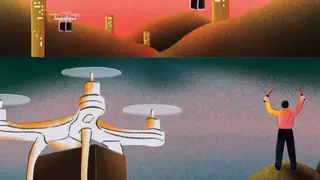
Trevor Wischnewsky works as a remote pilot in command at FlyTrex, overseeing delivery drone flights in Texas. The job requires FAA drone certification, aviation training, and coordination with an unmanned aircraft traffic management system. He can monitor up to ten drones at once and serves as a safety backup, particularly when weather threatens operations.
Trevor Wischnewsky became interested after seeing drones deliver pizza and sushi near his Texas home. At FlyTrex, he works as a remote pilot in command, a role that oversees delivery flights rather than manually flying each aircraft. The position calls for FAA drone certification and an FAA-approved training program, plus aviation experience; Wischnewsky had been preparing to become a commercial pilot and flight instructor.
From an operations center, he tracks deliveries using GPS, lasers, and sensors. He may supervise as many as ten drones simultaneously. Dallas–Fort Worth serves as a test area for a shared traffic-management network that lets competing autonomous drones exchange positions. Weather remains the main risk, and he acts as a safety backup when conditions change.
As drone delivery expands, roles like Wischnewsky’s could become more common, creating new aviation-adjacent jobs while changing how goods reach homes. Residents in service areas may gain faster access to food and small items, though they may also notice more airborne activity. Coordination through shared traffic systems could improve safety across competing operators, but its success may depend on reliable technology, weather handling, and regulatory oversight. Workers with FAA credentials and calm decision-making may find new opportunities, while existing aviation and logistics roles could adapt.