Alaska Oil Exploration Gets Faster Path Without Environmental Reviews
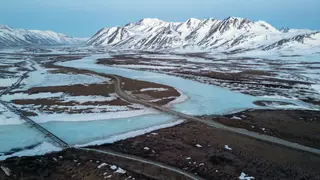
Federal land managers will no longer require environmental reviews before companies conduct winter oil and gas exploration in the Western Arctic. The Bureau of Land Management issued a categorical exclusion under the National Environmental Policy Act for the National Petroleum Reserve-Alaska, a vast federal tract. The agency says the change will speed energy development and lower costs, while exploration can disturb tundra, permafrost and the region's Iñupiat communities.
The National Petroleum Reserve-Alaska, called the Western Arctic, is the largest federally managed public land area. The BLM’s exclusion covers winter exploration, when firms build temporary roads, drill test wells and use heavy trucks to send seismic waves underground. The agency cites a long record of exploration it says caused no significant lasting harm.
The region is the traditional homeland of the Iñupiat and supports three major caribou herds, whose numbers have fallen by over half since 1990s highs, per a 2024 NOAA report. It also hosts millions of migratory birds, polar bears and seals. The Arctic warms at two to four times the global average, and sea-ice loss creates a feedback that amplifies warming.
The change may speed industry access and lower some development costs, potentially affecting energy supplies and prices over time. For Iñupiat communities and subsistence hunters, faster exploration could increase disturbance to caribou migration and calving areas, though effects may vary by season and location. Reduced review may also limit public information about cumulative impacts, shaping how nearby residents and environmental managers respond.