South Korea's Nuri Deploys 14 Payloads as Global Launch Count Falls
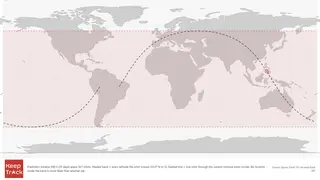
South Korea's Nuri rocket launched 14 payloads from Naro on October 7, 2026. China followed on October 9 with a Long March 12 carrying SatNet LEO Group 27. With no Falcon 9 flights during the week, only two orbital launches occurred worldwide, both successful.
South Korea’s Nuri lifted off from NARO LC2 on October 7 at 03:25 UTC, carrying SLEDGE, Neonsat-2, Neonsat-3, and eleven other payloads. All fourteen reached orbit, giving KARI and its partners a rare domestic launch opportunity for government and university smallsats. Neonsat-2 and Neonsat-3 support Korea’s planned Earth-observation microsatellite constellation.
Two days later, China’s Long March 12 launched SatNet LEO Group 27 from Wenchang at 19:27 UTC. That government-supported broadband network ranks behind only Starlink among low Earth orbit broadband efforts. No Falcon 9 flew that week, so only two orbital launches occurred worldwide, both successful.
The Nuri mission may strengthen South Korea’s ability to place small government and university satellites without relying on foreign launchers, benefiting researchers and domestic industry. China’s SatNet expansion could increase competition for spectrum and orbital slots, while adding objects in crowded low Earth orbit. That may raise tracking and conjunction-screening workloads for operators and regulators. With Falcon 9 absent, the quiet week also shows how much global launch cadence can depend on a single provider.