Physician Rejects Predictions That AI Will Replace Human Doctors
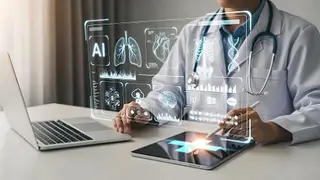
Dr. Gennady Gekht argues that artificial intelligence will not replace physicians, rejecting online claims and recent study coverage that suggest otherwise. He points to a JAMA Network Open paper by Goh et al. in which AI outperformed unaided doctors and AI-assisted doctors did not surpass AI alone. Gekht contends that diagnosis is not the main or most difficult part of medical practice, so the study does not imply that doctors are obsolete.
Dr. Gennady Gekht, chief clinical officer at Hygia, responds to online claims and coverage of a JAMA Network Open study by Goh et al. That research reportedly found AI alone outperformed physicians without AI, while physicians using AI did not beat AI by itself. Gekht says such results do not make doctors obsolete because diagnosis is not the central or hardest task in medical practice.
He notes many common conditions—diabetes, hypertension, arthritis, migraine—are often diagnosed quickly. The harder work follows: building trust, securing patient acceptance, and helping people and families cope with fear, denial, and uncertainty, as with dementia, multiple sclerosis, or ALS. At Hygia, he focuses on virtual avatars, engagement, and empathy-like support.
This story could influence how patients, clinicians, and health-technology developers view AI’s role in care. Patients may feel more confident consulting AI for initial information, yet still seek human guidance for emotional and relational needs. Doctors may face pressure to demonstrate value beyond diagnosis, while health systems and AI vendors could adjust tools toward communication, trust-building, and follow-up support. The discussion may also affect public trust in medical expertise, depending on how study findings and commentary are framed.