Task-first design could help practical robots beat flashy humanoids
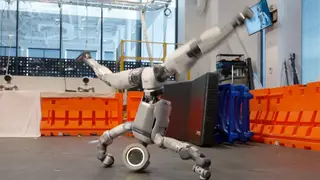
The article argues that robotics companies often build impressive humanoid platforms before identifying a useful job for them. It recommends starting with an economically valuable task, then selecting the necessary hardware, sensors, and form factor. The author says this workflow-driven approach is needed to move embodied AI beyond viral demonstrations and into commercial use.
The piece notes that viral humanoid feats—balancing, backflips, laundry folding, rough-terrain walking—signal technical progress in embodied AI. Yet the term “humanoid” is loosening as companies add wheels, sensors, manipulators, hats, and screens while removing heads or eyes. The author, working with humanoid developers on hardware bottlenecks, sees a repeated pattern: firms create an impressive platform first, then search for an industrial job.
A pin-insertion example requires roughly 20 µm clearance, 5 N mating force, sub-0.1 N contact-force resolution, and fast control to prevent bending. Bulk pallet packing instead demands payload, rigidity, and million-cycle durability. A compromise sensor may suit neither. Force-sensing ROI appears when contact force held near ±0.2 N cuts connector scrap from 1.2% to 0.5%, saving about $450,000 yearly per assembly line.
Count words. First para: The(1) piece2 notes3 that4 viral5 humanoid6 feats—balancing7, backflips8, laundry9 folding10, rough-terrain11 walking—signal12 technical13 progress14 in15 embodied16 AI17. Yet18 the19 term20 “humanoid”21 is22 loosening23 as24 companies25 add26 wheels27, sensors28, manipulators29, hats30, and31 screens32 while33 removing34 heads35 or36 eyes37. The38 author39, working40 with41 humanoid42 developers43 on44 hardware45 bottlenecks46, sees47 a48 repeated49 pattern50: firms51 create52 an53 impressive54 platform55 first56, then57 search58 for59 an60 industrial61 job62. ~62.
Second: A1 pin-insertion2