IceCube Observatory Uses Antarctic Ice to Capture Neutrino Signals
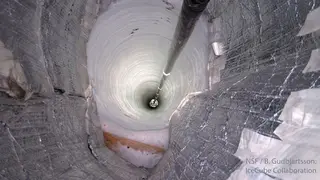
The Astronomy Picture of the Day for October 11, 2026, features the IceCube Neutrino Observatory near the South Pole. Nearly 100 holes were melted into the ice and fitted with strings of basketball-sized light sensors, which then refroze. These detectors record blue light from secondary particles created when high-energy cosmic neutrinos interact with ice molecules, and IceCube has identified many such events.
The October 11, 2026 Astronomy Picture of the Day highlights IceCube, a neutrino observatory built deep in Antarctic ice near the South Pole. Workers melted almost 100 vertical holes and placed sensor-laden strings in them; the holes then froze shut. Each string carries detectors about the size of basketballs.
These sensors watch for blue light produced when high-energy cosmic neutrinos strike ice molecules and create fast secondary particles. IceCube has recorded many such neutrino events and is described as the largest neutrino detector ever made. A 2010 image shows one of its final detector strings being lowered. Earlier that week, a founding leader of the IceCube Collaboration was named to receive the Nobel Prize in Physics.
Discoveries from IceCube could deepen public understanding of the universe and may inspire students toward physics, astronomy, and engineering. The observatory’s extreme Antarctic setting may also draw attention to polar research logistics and international scientific cooperation. Its Nobel recognition could raise the profile of neutrino astronomy, potentially influencing future funding, education, and public engagement. People interested in space science, universities, and polar research programs may feel these effects most directly.