Self-driving trucks get federal exemption for roadside warning devices
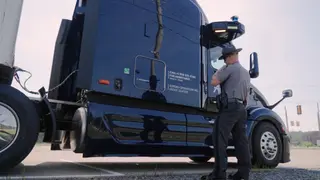
The Federal Motor Carrier Safety Administration granted a five-year exemption that lets autonomous truck companies use cab-mounted warning beacons instead of reflective triangles placed by human drivers. Aurora Innovation and Kodiak AI can now move past a regulatory hurdle that had slowed commercialization of self-driving freight. Industry officials said the change will improve roadside safety and delivery efficiency.
Federal rules have required a human driver of a disabled conventional truck to stop, turn on hazard lights, and set reflective triangles on the roadway within ten minutes. Autonomous trucks lack an onboard driver to perform that task, creating a compliance problem.
Aurora challenged the requirement in court after an exemption request was denied, then appealed while operating under a temporary waiver. The agency's five-year exemption permits cab-mounted warning beacons instead. Kodiak AI's Daniel Goff and Aurora's Gerardo Interiano framed it as beneficial for roadside safety and freight efficiency.
This exemption may affect autonomous truck developers, their customers, and roadside workers by reducing the need for people to exit vehicles near traffic. It could speed self-driving freight commercialization, potentially changing trucking jobs and delivery timelines. Other motorists might encounter beacon-equipped disabled autonomous trucks, so clear public understanding of the new warning system may matter. Regulators may watch whether the five-year trial improves safety or creates new compliance questions.