Retirement spending can rise, but market drops pose risk
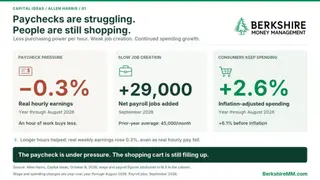
The column examines how consumer spending has kept rising even as inflation-adjusted wages have fallen and the job market has softened. It says more households are tapping investment portfolios to support their lifestyles, making the economy feel different for people with substantial assets than for those relying mainly on wages. It warns that a sharp market decline could cause affluent households to reduce spending quickly, creating a new economic vulnerability.
In the 12 months through August 2026, average hourly pay lost 0.3% after inflation, while real weekly earnings gained 0.3% because of longer work hours, according to the Bureau of Labor Statistics. September payrolls increased by only 29,000; July and August figures were revised lower by a combined 60,000, and monthly job growth averaged 45,000 over the past year.
By August, household outlays had climbed 6.1% from the prior-year level in nominal terms and 2.6% once inflation is removed. That compares with pre-pandemic August-to-August gains averaging roughly 3.8% in current dollars and 2.3% adjusted for inflation between 2010 and 2019.
Households with sizable portfolios may feel more comfortable spending, even as wage earners face weaker hourly purchasing power and slower hiring. If markets fall sharply, affluent retirees and investors could cut discretionary spending quickly, potentially transmitting Wall Street losses into Main Street demand. That may make economic conditions feel increasingly unequal: those living mainly on wages could remain stretched, while investment-owning households may be more sensitive to market swings. The broader impact could include slower consumer activity and added uncertainty for businesses relying on affluent customers.