A $750 Refresh Keeps Original Pink Bathroom Tile
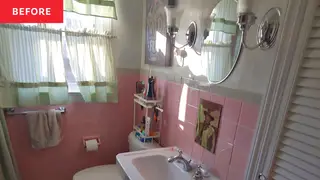
Geneva Slye updated a bathroom with original 1950s pink tile without doing a full remodel, spending $750. She removed old caulk and grout, re-caulked and re-grouted the tile, and replaced the gray border tile with green-painted chair molding.
Geneva Slye’s bathroom belongs to a 1950s house, and its pink tile was original. The room also had gray peel-and-stick flooring, a newer toilet and sink, chrome lights, and a silver-edged mirror, producing a pink-and-gray look she disliked. She chose not to gut the space, aiming to preserve the tile and reuse the newer fixtures.
Her $750 refresh included removing and replacing caulk and grout, swapping the gray border tile for Wayfair chair molding painted Benjamin Moore Turtle Green, and installing small hexagon floor tiles on mesh sheets. She and her fiancé Kevin tackled the flooring as first-time DIYers, with help from his father, who had built Kevin’s childhood home. Electrical surprises delayed lighting updates.
Stories like this could encourage budget-conscious homeowners and DIYers to preserve original features rather than demolish them. By showing a $750 refresh, it may make vintage tile, reused fixtures, and small material swaps feel more attainable. That could reduce renovation waste and help older homes retain character, while also shaping demand for products such as tile, grout, molding, and lighting. Its impact may be modest, but it offers a visible example of how preservation and affordability can overlap.