Seven Landmarks That Preserve Native American History in the U.S.
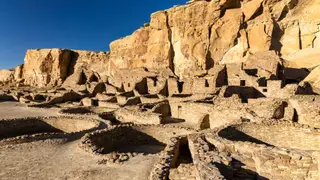
The article highlights seven Native American archaeological sites across the present-day United States in observance of Indigenous Peoples Day. Among them, Chaco Canyon served as a hub for the Ancestral Puebloan people from roughly A.D. 850 to 1250 and contains Pueblo Bonito, a large stone complex with hundreds of rooms and dozens of kivas. Cahokia, in Illinois, was the biggest Indigenous settlement north of Mexico and may have housed as many as 40,000 residents around A.D. 1100.
EXPANDED:
Chaco Canyon served as a political and ceremonial center for Ancestral Puebloan peoples from about A.D. 850 to 1250. Pueblo Bonito was a four-story stone complex with more than 600 rooms and 35 kivas. Builders moved over 200,000 timber beams from distant mountains; roads stretched beyond 400 miles, and imported macaws and cacao reveal far-reaching trade.
Cahokia, in Illinois, was the biggest Native settlement north of Mexico, with perhaps 40,000 residents around A.D. 1100. People lived in clay-and-stick houses and constructed plazas, palisades, and earthen mounds. A five-ton log arrived from over 110 miles away; Monks Mound stands about 100 feet tall, and a rebuilt timber circle tracks solstices and equinoxes