NASA satellites show Australia's outback bursting into wildflowers after heavy rain
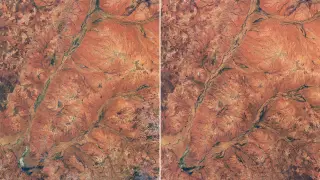
Unusually heavy rain turned Western Australia's normally dry Murchison region into a broad carpet of wildflowers by late winter 2026. NASA Landsat 8 images from August 2025 and August 2026 show a dramatic increase in vegetation. Local experts believe it may be the area's most impressive wildflower season in nearly 20 years.
Landsat 8's OLI sensor recorded the same Western Australian area in late August 2025 and late August 2026. The Murchison site, roughly 600 kilometers north of Perth, is normally dry grazing country where grasses, saltbush, and mulga dominate. Wildflower abundance there varies sharply with rainfall.
Cold fronts delivered moisture; June rainfall exceeded average, and August was especially wet. That let dormant seeds sprout, creating a broad bloom. The display reached CSIRO's Inyarrimanha Ilgari Bundara radio-astronomy observatory, a radio-quiet site where threatened plants were tracked on former grazing land.
The bloom could bring attention and seasonal visitors to a remote region, potentially benefiting nearby communities and tourism operators. Pastoralists may see short-term grazing gains, though such rainfall-driven abundance is unlikely to last. Scientists and conservation managers may use the event to highlight threatened plants and arid ecosystem recovery, while the radio observatory could face greater public interest alongside its need to protect a quiet zone. These effects remain speculative and depend on access, weather, and how long the display persists.