Local pH control boosts chemical reaction selectivity from 16% to 97%
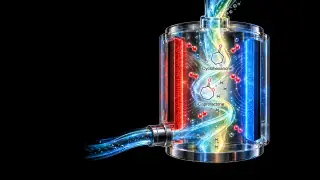
Researchers found that local pH near electrodes can determine whether an electrosynthesis reaction produces the desired chemical. By redesigning the reactor to control acidity and liquid flow, they increased the desired product share from about 16% to 97%. The approach uses oxygen and electricity to make lactones and epoxides without adding peroxide oxidants.
The study examined organic electrosynthesis, where current drives formation of carbon-containing compounds. Earlier optimization often focused on voltage, electrode material, and bulk solution composition. The Seoul National University team instead tracked acidity immediately adjacent to electrodes, where electron transfer occurs. Adjusting electrode spacing and flow let them manage that microenvironment.
Using oxygen and electricity, they formed lactones and epoxides. Lactones serve as precursors for biodegradable plastics and polyurethanes; epoxides appear in adhesives, protective coatings, electronic resins, and pharmaceuticals. Their reactor raised desired-product share from roughly 16% to 97%, according to work in JACS. This route may avoid separately added peroxide oxidants.
If scaled beyond the lab, this approach could affect chemical manufacturers, workers, and consumers of plastics, medicines, adhesives, and electronics. Lower reliance on added peroxide oxidants may reduce handling hazards and waste, while better selectivity could improve material efficiency. Those benefits may depend on reactor cost, durability, and whether the method works across diverse reactions. Communities near production sites might see safer operations, though actual outcomes would require industrial testing and lifecycle assessment.