Testing Water Behavior in Lunar Gravity for Future Moon Crops
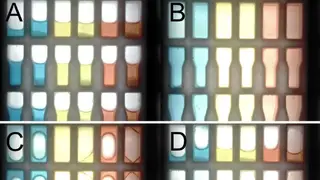
Researchers investigated how water moves under lunar gravity to help plan for growing plants on the Moon. Because lunar gravity is unlike both Earth gravity and microgravity, they used the New Shepard 29 flight to obtain longer low-gravity observations. The findings are intended to clarify fluid behavior needed for cultivating crops in lunar soil.
The team, led by Karl Hasenstein with John Kiss and Christopher McKay, published in Microgravity Science and Technology. Prior plant work includes ISS Veggie and APH facilities, and Arabidopsis seeds germinated in Apollo lunar soil. Water behaves differently in microgravity, where capillary forces dominate and root hydration and aeration become difficult.
On the NS-29 flight in February 2025, after booster separation the capsule spun at roughly 11 RPM, producing about 1.76 m/s² of artificial acceleration — lunar gravity — for around two minutes. The autonomous payload used a 3D-printed housing with 18 fluid-filled cavities, an Arducam and LED backlight, testing deionized water, 30% glycerol, and 0.8% saline across vertical, 15-degree, and 20-degree wall geometries.
Findings like these could inform designs for watering systems in lunar greenhouses, potentially shaping how future crews supplement packaged food with fresh produce. Space agencies and commercial habitat developers may use such fluid-physics data when engineering soil-based growth modules, while researchers gain a benchmark for partial-gravity experiments. Any societal benefit would likely arrive slowly, through improved life-support reliability and reduced resupply demands rather than immediate everyday applications.