2026 state legislative races place third in competitiveness among recent cycles
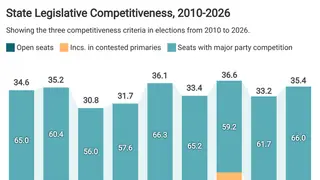
The 2026 state legislative elections rank third in competitiveness among cycles dating back to 2010, according to an annual analysis. The report links the ranking to a larger-than-average share of incumbents who drew primary opponents and seats where both major parties are competing in the fall. It also notes that 6,137 seats are up across 46 states, with 66% contested by both parties and 17.3% open.
In 2026, 6,137 legislative seats are up across 46 states, with voting set for Nov. 3. The overall competitiveness score is 35.4, slightly above the 2010–2024 average of 34.0, placing this cycle behind only 2018 and 2022 among recent midterms.
About 66% of seats feature both major parties, just under the 2018 high of 66.3%, while 17.3% are open, below the 18.7% average. Contested primaries involve 22.8% of incumbents, above the 21.7% norm. In 17 chambers across 11 states, one major party is already assured a majority because the other is not competing.
The competitiveness ranking may affect voters, candidates, and parties. More two-party general contests could offer voters clearer choices, while fewer open seats may reduce openings for newcomers. Contested primaries could push incumbents toward their party bases. In chambers where one party is already assured a majority, residents may have less influence over control. These dynamics could shape state policy priorities after 2026, though actual effects depend on outcomes and local conditions.