World Economic Forum official urges broader threat modeling for cyber risk
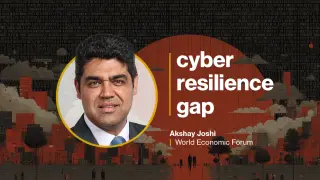
Akshay Joshi, head of the World Economic Forum's Centre for Cybersecurity, discusses how AI, geopolitics, and industrialized fraud are reshaping cyber risk. The Global Cybersecurity Outlook 2026 found that 73% of respondents were personally affected by cyber-enabled fraud in 2025 and 77% saw more fraud and phishing, making it CEOs' top concern above ransomware. He highlights a widening resilience gap between large and small organizations and regions, plus skills shortages and the need for public-private cooperation.
Akshay Joshi leads the World Economic Forum's Centre for Cybersecurity. He says cyber risk is now shaped by three forces: artificial intelligence, geopolitical division, and fraud operating at industrial scale. The Forum's Global Cybersecurity Outlook 2026 reports that 73% of respondents were personally touched by digitally enabled fraud in 2025, while 77% observed more fraud and phishing. CEOs now place these crimes above ransomware among their top concerns.
The same research points to a growing resilience divide: larger organizations and some regions are better prepared than smaller ones and others. Skills shortages deepen that gap. Joshi argues that joint efforts across sectors must work at scale, and that boards and CEOs should broaden their threat models beyond their networks.
The shift toward fraud and AI-driven threats could affect consumers, employees, and smaller organizations most directly, as they may have fewer resources to detect or recover from attacks. If resilience gaps persist, trust in digital services may erode, while skills shortages could slow response. Broader threat modeling and cross-sector cooperation may help, but their societal benefit depends on whether smaller players and vulnerable regions can participate meaningfully.