SpaceX CRS-35 to Deliver Health and Biology Studies to Space Station
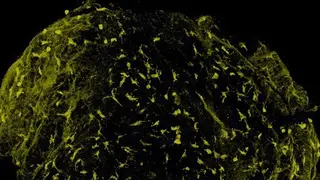
NASA’s 35th Commercial Resupply Services mission with SpaceX is set to launch from Cape Canaveral Space Force Station. The flight will carry four Biological and Physical Sciences investigations, including lab-grown brain models, a crop disease study, a faster astronaut health assessment, and antibiotic-resistant bacteria research. The experiments are intended to support astronaut health on long-duration missions and advance benefits for life on Earth.
The CRS-35 cargo flight is scheduled to lift off from Cape Canaveral Space Force Station. Its payload includes four Biological and Physical Sciences studies. One sends lab-grown human brain tissue to the station for five weeks; researchers will compare it with matching Earth-based samples to examine cellular changes.
Other investigations examine whether a fungal crop disease worsens in microgravity, test a compact microplate reader for rapid biomarker detection aboard the station, and continue surface sampling to track drug-resistant bacteria during its fourth and last scheduled station visit.
This mission could affect astronauts, spaceflight researchers, and people on Earth. Faster onboard health testing may allow earlier detection of infections or other issues during long-duration missions. Brain and crop studies may inform countermeasures for neurological risks and disease-resistant agriculture. Research into drug-resistant microbes could add knowledge about how superbugs evolve, potentially supporting infection control. These are early-stage possibilities, and benefits would depend on results and follow-up work.