Ancient Jawless Fish Fossil Reveals Evolutionary Mix in Early Devonian China
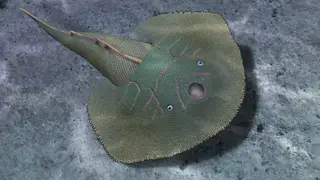
Paleontologists have named a new galeaspid fish, Asioaspis brachyotus, from roughly 419-million-year-old rocks in Yunnan, China. The species is based on several headshields and combines traits seen in both basal and more derived jawless vertebrates. Its discovery adds to the diversity of the Polybranchiaspiformes, an extinct group more closely related to jawed vertebrates than to modern lampreys and hagfish.
The fossil material came from the Xishancun Formation near Miandian Reservoir in Qujing, Yunnan. It comprises three nearly complete and three partial headshields. The oval shield, about 4.7–6 cm long, had serrated margins, a granular surface, a broad lower rim, and at least twelve gill-pocket pairs.
Asioaspis brachyotus sits between basal and derived polybranchiaspiforms in the team’s analysis. Its central dorsal opening and paired eye openings were widely spaced, unlike close-set forms. Because sediment would have entered its mouth and gill chamber if buried, researchers infer an epibenthic seafloor lifestyle and a possible transition from semi-infaunal ancestors.
This discovery may mainly affect paleontologists, science educators, and museum audiences by refining how early jawless vertebrates are presented in evolutionary trees. It could add a Chinese Early Devonian example to public exhibits and classroom discussions about the origin of jawed vertebrate traits. Broader societal effects are likely modest, though local geoheritage and science tourism in Yunnan may benefit if the find is communicated carefully.