Analysis: Russian military adapts by studying Ukrainian and NATO command methods
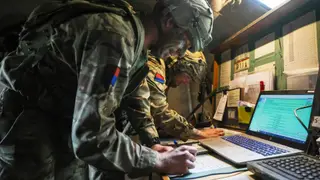
The article argues that Russia's initial invasion failures exposed deeper problems in how its officers were trained to follow orders rather than make independent decisions. It contrasts NATO's mission command approach, which relies on trust and initiative, with Russia's hierarchical culture. Ukraine's Defense Forces are described as moving toward that Western-style command philosophy.
Russia's early setbacks in its full-scale invasion of Ukraine were widely attributed to logistics, gear, training and morale, yet the article argues the core issue lay in battlefield decision-making. Commanders faced situations where orders from above were missing or outdated, exposing an education system that emphasized paperwork and tactical execution over independent thought.
Moscow's centralized model descends from the Soviet school and mirrors a broader autocratic governing culture. Analysts describe it as top-down, leaving junior officers little room to act alone — a flaw visible at Hostomel Airport, the Siverskyi Donets crossing and Chornobaivka.
This debate over command culture may shape how militaries train and promote officers well beyond this war. Ukraine's shift toward mission-style leadership could affect soldiers at the lowest levels, who may gain more latitude to act on intent rather than wait for instructions. For observers in NATO states, the contrast offers a lens for assessing their own readiness. Civilians in affected regions remain the ones most exposed to outcomes on the battlefield.