Luxembourg's rationale for removing Fridman from EU sanctions draws skepticism
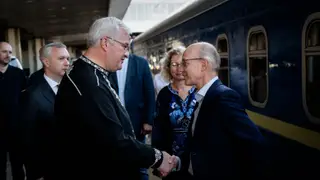
Luxembourg's prime minister defended the September decision to remove Mikhail Fridman from EU sanctions, saying it could help end a $16 billion arbitration claim against the country. Lawmakers told the Kyiv Independent that no contact occurred with Fridman or his legal team and the arbitration has not been withdrawn. Critics say the move sets a dangerous precedent and may weaken the EU sanctions regime.
The September removal of Mikhail Fridman and Alisher Usmanov came as EU Russia sanctions faced renewal, which required all member states to agree. France, Luxembourg, and Slovakia reportedly threatened to block the rollover unless the two men were dropped, a move that would have affected roughly 3,000 listings.
Luxembourg's prime minister, Luc Frieden, told a closed parliamentary committee that removing Fridman might persuade him to abandon a $16 billion arbitration claim. Lawmakers said no contact occurred with Fridman or his lawyers, and the case remains active. The European Commission has said EU rules contain a no-claims provision and other safeguards for states that enforce sanctions.
The dispute may affect how Europeans view sanctions enforcement, as a wealthy individual's legal claim appears to influence a member state's stance. If delisting is seen as yielding to financial pressure, it could weaken public confidence in EU unity and complicate future sanctions renewals. Ukrainian officials and citizens, who rely on sanctions pressure, may be most directly affected, while Luxembourgish taxpayers and firms could face uncertainty over arbitration costs.