NASA and SpaceX prepare CRS-35 resupply launch to ISS
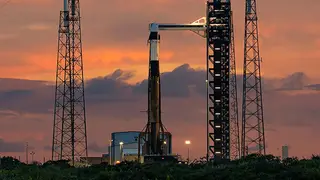
NASA and SpaceX prepared to launch the CRS-35 resupply flight to the International Space Station on Oct. 13, 2026, with liftoff set for 6:33 a.m. EDT from Cape Canaveral's pad 40. The Falcon 9's first stage, making its eighth flight, was to carry the Dragon C211 spacecraft, which would dock at the Harmony module's space-facing port around Oct. 15. The payload included the final set of ISS Roll-Out Solar Arrays and several science investigations.
The CRS-35 flight marks SpaceX’s 35th cargo run under NASA’s Commercial Resupply Services agreement. Falcon 9 booster B1096 is making its eighth trip, while Dragon C211 is flying for the fourth time after earlier cargo missions CRS-26, CRS-29 and CRS-33.
Dragon’s unpressurized trunk carries the last two ISS Roll-Out Solar Arrays, plus a container for the failed Canadarm2 joint removed during a June 30 spacewalk. Other cargo includes toilet hardware, maintenance tools and experiments on artificial retinas, 3D heart tissue, glass formation and inflammation.
Advances in orbital resupply may help sustain research that could lead to medical and materials breakthroughs, potentially benefiting patients and manufacturers on Earth. Space station crews and ground teams depend on such missions for supplies and maintenance. The launch may also strengthen public and commercial interest in low Earth orbit operations, though its direct near-term effects on most people are likely indirect.