Charles Messier cataloged the Whirlpool Galaxy in 1773, long before its true nature was understood
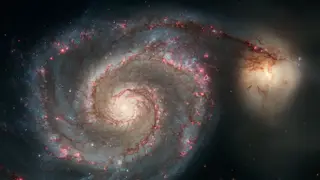
On October 13, 1773, French astronomer Charles Messier recorded the object now known as the Whirlpool Galaxy, or M51, while searching for comets. He could not see its spiral structure and did not recognize it as a galaxy. Later, William Parsons observed its whirlpool shape, and Edwin Hubble eventually established that M51 and similar objects are galaxies.
Messier began his catalog after finding M1, the Crab Nebula, while tracking a comet in 1758. By 1773 he had recorded dozens of objects resembling comets, including M51, to keep observers from confusing them with comets. M51 was his 51st such entry. Seventy-two years afterward, William Parsons perceived a whirlpool form yet labeled it a spiral nebula; Edwin Hubble later demonstrated that M51 and comparable objects were galaxies.
The object lies roughly 31 million light-years away and shines at magnitude 8.4, making it a small-telescope target in the northern Hunting Dogs constellation. Researchers think a past passage by companion NGC 5195 may have shaped M51's arms and spurred star birth.
This anniversary may remind casual skywatchers and students how scientific understanding changes over time. Amateur astronomers could use M51 as an accessible target, while educators may use its history to illustrate that cataloging and classification are provisional. The story may also encourage public interest in astronomy and in how instruments and theory reshape what people see.