Ancient Latvian Grave May Hold Victims of a Viking Raid
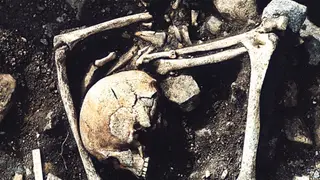
A study of a 1,200-year-old grave in Latvia identified six people, including a boy who was the son of one man and another man who was a third-degree relative. Three of the men had injuries from bladed weapons, possibly axes or swords, but how the other three died is unclear. Researchers say a Viking raid is possible because of the grave's ninth-century date and the fatal trauma, though a clash with a neighboring community remains another option.
The grave lies in the Čunkāni-Dreņģeri cemetery near the Gulf of Riga, a site found in 1924. It holds burials from Latvia’s Iron Age, roughly the seventh through eleventh centuries. Radiocarbon testing places this multiple burial in the later ninth century, during the early Viking Age.
Unlike a mass grave, the six were arranged deliberately. The female’s head pointed northwest; the males lay in a row beside her, heads southeast. Grave goods and local customs were observed. Genetic analysis linked the boy to one man and identified another as a third-degree relative.
This research may deepen public interest in Baltic Iron Age and Viking-era interactions, offering descendant communities and local museums a more nuanced view of violence, kinship, and burial practice. It could also remind audiences that genetic and archaeological evidence often supports multiple explanations rather than a single dramatic narrative. Such findings may influence heritage tourism and how museums interpret regional history, though conclusions remain provisional.