Anthropic's Claude Flags CRISPR-Like DNA Repeat, but Function Remains Unclear
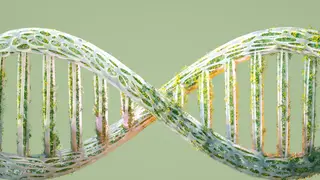
Anthropic says its Claude model identified a repetitive DNA sequence in a bacteriophage that resembles the repeats associated with CRISPR. The sequence sits next to a reverse transcriptase gene, hinting at a possible function, but Anthropic researchers say they still do not know what the enzyme or the DNA region actually does. They emphasize that more work is needed and that the AI is not a substitute for laboratory biologists.
Anthropic reported that Claude identified a repeating DNA region in a bacteriophage. The pattern resembles CRISPR-associated repeats, and it lies beside a reverse transcriptase gene, which encodes an enzyme that converts RNA into DNA. Company scientists Eric Kauderer-Abrams and Nicholas Perry stress that neither the enzyme nor the repeat region has a known role.
The find came as part of Anthropic's life-science effort to speed basic research and medical advances by turning natural discoveries into tools. The team cites PCR and CRISPR as inspiration. They describe this as Claude's first independent discovery in their lab, but caution it is very early and not comparable to those breakthroughs.
AI-assisted searches for natural DNA patterns could eventually help biologists and biotechnology or medicine developers identify useful molecular tools faster. If such findings are validated in laboratories, patients might benefit through new research methods or therapies. For now, because the sequence's function is unknown, its practical impact may remain limited, while the episode could influence how scientists and the public view AI's role in discovery.