Diamond Device Moved by Electron Spin Could Aid Quantum Gravity Tests
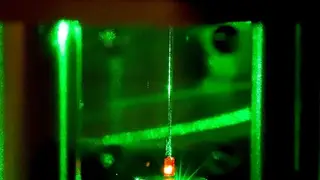
Researchers at the Okinawa Institute of Science and Technology used electron spins in a diamond to move a centimeter-scale levitating device. The experiment, published in Science Advances, produced a classical mechanical response to a quantum force in an object far more massive than those used in earlier spin-mechanical tests. The work may offer a new route for probing how quantum mechanics and gravity fit together.
At the Okinawa Institute of Science and Technology, researchers levitated a centimeter-scale device using magnetic forces and pulsed a green 50-milliwatt laser at a diamond containing nitrogen-vacancy centers. The laser polarized the spins, shifting the diamond's magnetic moment and nudging it downward; an interferometer tracked the displacement. The object is roughly 100 million to a billion times heavier than those in earlier spin-mechanical work.
The team's aim is to eventually place a massive object in a superposition of locations, since gravity's influence on microscopic systems is too faint to test. Levitating in vacuum helps limit environmental noise.
This result may matter most to physicists pursuing quantum gravity, but its ripple effects could reach broader audiences. Advances in controlling ever-larger quantum systems could eventually inform sensing technologies, from navigation to medical imaging, though such applications remain speculative and likely years away. For now, the work is a foundational step, and its practical benefits depend on whether researchers can extend quantum control to objects of this scale.