Colossal Statues Believed to Depict Ramesses II Discovered in Egypt
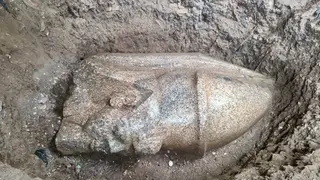
Archaeologists in Behbeit El-Hagar, in Egypt’s Gharbia Governorate, have found fragments of two colossal royal statues thought to depict Ramesses II. The discovery followed a villager’s report of a carved stone block, and a nearby pink granite block bearing hieroglyphs also emerged. The work was carried out by an Egyptian mission from the Supreme Council of Antiquities.
The find in Behbeit El-Hagar, in Egypt’s Gharbia Governorate, consists of pieces from two oversized royal sculptures. They are thought to represent Ramesses II. A local resident’s report of a carved stone block led to the discovery. Nearby, a pink granite slab inscribed with hieroglyphs also came to light. An Egyptian team from the Supreme Council of Antiquities carried out the work. The material adds to the archaeological record of royal sculpture and inscribed stone in ancient Egypt, though the original setting of the pieces remains unstated.
The find could draw greater local and international attention to Behbeit El-Hagar and Egypt’s archaeological heritage. Residents may see increased interest in their area, while researchers and museums could gain new material for study and display. Any effects on tourism, local pride, or heritage policy would depend on further excavation, documentation, and official decisions.