Ancient Chinese Strategy Inspires a Long-Unsolved Math Problem
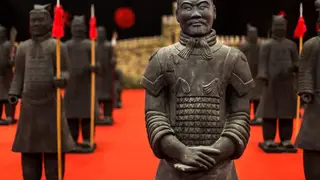
A puzzle attributed to the ancient strategist Sun Bin involves choosing outcomes in horse races and has connections to card games and gerrymandering. The general version of the problem went largely unexamined until 1980 and took decades to solve. The article explores simpler probability puzzles that build toward the full solution.
The piece recounts Sun Bin, a Chinese military strategist from over two millennia ago. Though a rival king jailed and tortured him, leaving him wheelchair-bound, he later advised another ruler and helped secure two major victories. His racetrack trick—matching horses cleverly rather than by rank—became a mathematical puzzle.
That puzzle’s broad form stayed mostly untouched until 1980, when the author’s college classmate encountered it again. Three decades later, the classmate shared it with the author. The article uses coin-flip probabilities and team-ranking scenarios to lead readers toward the full solution, noting links to cards and gerrymandering.
This story may draw general readers into probability, combinatorics and game strategy by tying abstract puzzles to familiar contests. Students and educators could use its staged examples to build intuition, while mathematicians and computing researchers may appreciate a long-open problem’s history. Because the puzzle touches card games and gerrymandering, analysts and civic observers might see how ranking and allocation rules shape outcomes, though the article itself remains a mathematical exploration rather than a policy argument.