Aldabra Atoll Now Hosts Nearly 183,000 Giant Tortoises
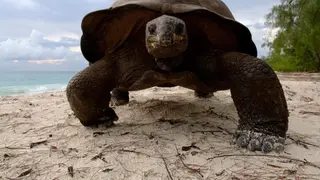
A new survey led by the Seychelles Islands Foundation and the University of Exeter estimates nearly 183,000 adult and subadult Aldabra giant tortoises on Aldabra Atoll. The estimate, based on monitoring records from 2018 through 2022, is higher than the widely cited figure of about 100,000 from the late 1990s and exceeds the human population of Seychelles. The population rebounded from fewer than 1,000 in the 19th century after decades of protection, including designation as a strict nature reserve and a UNESCO World Heritage Site.
The survey drew on five years of field records, from 2018 to 2022, gathered by Seychelles Islands Foundation staff and analyzed with University of Exeter researchers. Published in Ecology and Evolution, it gives the first rigorous atoll-wide estimate and replaces the older late-1990s figure of roughly 100,000.
The estimate covers adult and subadult Aldabra giant tortoises, whose numbers seemed steady during monitoring. Their 19th-century low fell below 1,000 before strict reserve status in 1981 and UNESCO listing in 1982. Bayesian hierarchical distance sampling corrected for hidden animals, especially in dense scrub, mangroves, and Pemphis, while tortoise turf held the highest densities.
The finding may strengthen Aldabra’s standing as a conservation emblem, potentially drawing greater scientific and public attention to long-term monitoring. Seychelles communities and reserve managers could benefit if the atoll’s healthy tortoise population supports sustainable ecotourism and research partnerships. For global conservation, the result may offer a hopeful example of recovery after exploitation, though it could also raise expectations about funding, habitat protection, and careful visitor management. These effects would depend on how authorities and stakeholders use the estimate.