Myddosome Assembly May Drive Persistent Inflammation
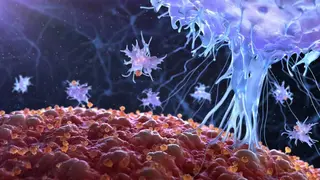
Research at Boston Children's Hospital indicates that inflammatory signaling can continue after proteins leave Toll-like receptors, contrary to the long-held expectation that receptor binding is required throughout. The released proteins assemble a cellular structure called a myddosome, which switches on genes that promote inflammation. The team proposes this structure as a possible target for treating autoimmune conditions, with the findings published in Nature.
Since the 1990s, Toll-like receptors have been viewed as central immune sentinels, prompting efforts to treat autoimmune disease by blocking them. Those receptor-focused approaches have yielded limited clinical success.
Boston Children’s researchers found that signaling proteins must detach from these receptors before they can form a myddosome, an intracellular organelle that turns on inflammatory genes. The work, led by Jonathan Kagan and published in Nature in September 2026, also included mouse drug experiments suggesting myddosome disruption reduced inflammation.
If the mouse findings translate, people with autoimmune conditions or persistent inflammation could eventually gain treatments aimed at myddosomes rather than Toll-like receptors. Drug developers and researchers may pursue new small-molecule classes, though years of testing and uncertain human results lie ahead. Patients might see another option if existing receptor-focused approaches continue to disappoint, but no immediate clinical change is guaranteed.