Mouse Brain Map Reveals Longest Neuron and New Clues to Norepinephrine’s Targeted Roles
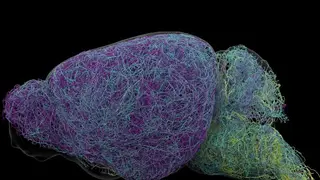
Researchers mapped norepinephrine-producing neurons in the mouse locus coeruleus, finding that dorsal cells connect mainly to the cortex and forebrain while ventral cells connect to the brainstem and spinal cord. They reconstructed a 70-centimeter neuron, described as the longest ever measured in a mouse, and recorded activity linked to changes in choice behavior after negative outcomes and to reward-related cues. The findings suggest this brain region acts more like a targeted delivery network than a single uniform broadcaster.
The locus coeruleus is a small brainstem nucleus whose name means “blue place.” It supplies norepinephrine, a messenger involved in attention, learning, stress responses, and heart rate. The Allen Institute team used imaging, recordings, genetic tools, and mouse behavior to map its cells.
They imaged nearly 35,000 neurons, profiled almost 400,000 cells, and reconstructed complex cells. Dorsal cells projected upward to cortex and forebrain; ventral cells projected downward to brainstem and spinal cord. Axons averaged about 35 centimeters, and one reached 70.32 centimeters. Activity patterns differed: dorsal cells responded after negative outcomes, while ventral cells fired before reward cues were ignored.
This mapping could sharpen research into attention, stress, and learning disorders by linking specific norepinephrine cell groups to distinct functions. Patients with conditions involving arousal, mood, or autonomic regulation may eventually benefit if targeted treatments emerge, though mouse findings may not translate directly. Scientists may use the methods to study other brainwide systems. The work is foundational, so near-term societal effects are likely indirect.