Moon's Shrinking Rate Measured as Quakes Pose Risk to Lunar Bases
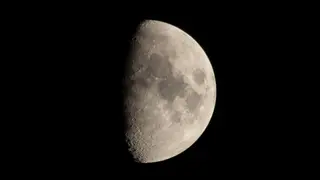
Researchers analyzed images from NASA's Lunar Reconnaissance Orbiter Camera to estimate that the moon's radius has contracted by roughly 148 feet over the past 400 to 800 million years. Because the moon has a single tectonic shell, cooling can trigger faults and moonquakes across its surface, and the team cataloged more than 10,000 young faults. Mapping these features could help planners assess hazards for future lunar habitats.
Researchers from the Smithsonian National Air and Space Museum, led by Thomas Watters, used Lunar Reconnaissance Orbiter Camera images collected over more than 17 years. Their study in The Planetary Science Journal estimates the moon’s radius shrank by almost 148 feet across 400–800 million years—roughly 2.4 to 4.3 inches per million years, or 0.1 micrometer yearly.
Because the moon has one continuous rocky shell rather than many plates, cooling can create faults and moonquakes almost anywhere. The team identified more than 10,000 young faults; regions with thicker crust show fewer, suggesting greater stability. This mapping may inform planning for future lunar habitats.
This research could matter most to space agencies, commercial lunar ventures, and future astronauts weighing where to build habitats. If moonquakes can occur across the surface, hazard maps may influence site selection, structural design, and risk planning. It may also shape public and investor confidence in long-term lunar settlement, though the contraction is extremely slow and does not imply imminent danger. The findings mainly add a safety and planning consideration for missions already envisioned.