Author examines Arctic competition as melting ice opens new routes
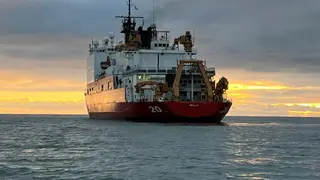
In her book Sea Change, Rana Foroohar describes traveling on a U.S. Coast Guard icebreaker to report on the Arctic's growing strategic importance. She says melting polar ice is opening shipping lanes that can cut travel time between the Atlantic and Pacific by up to 40%, drawing interest from China and Russia. Foroohar also notes the region's oil, gas, rare earth minerals and undersea cables are fueling competition and potential conflict.
Rana Foroohar's Sea Change recounts her time aboard the USS Healy, a U.S. Coast Guard icebreaker, examining the Arctic's rising strategic role. She reports that polar melting now allows North Pole shipping for roughly two to three weeks annually, with Atlantic-Pacific voyages potentially shortened by as much as 40 percent.
The book also highlights competition over oil, natural gas, rare earth minerals, and undersea communications cables. Foroohar notes that the U.S. has not joined the U.N. Law of the Sea Convention, despite support from several past presidents, while some senators objected to international authority. She frames Arctic rivalry as part of a shift from global cooperation toward regional power blocs.
As Arctic shipping and resource competition grow, northern communities, shipping companies, militaries, and cable operators may face new pressures and opportunities. Consumers could see shorter trade routes and lower costs, but also greater uncertainty if rivalries disrupt commerce or undersea communications. U.S., Chinese, and Russian interests may increasingly shape regional rules, making Arctic diplomacy more consequential for global trade, security, and information flows.